
What Is Actinic Keratosis?
- posted: Dec. 01, 2021
If you’ve ever spent time basking in the sun or even in a tanning bed, then you’ve exposed your skin to UV rays, which can be incredibly damaging to the skin and increase your risk for skin cancer. If you’ve spent extensive amounts of time exposed to UV rays, then you’re at an increased risk for developing actinic keratosis, a rough scaly patch of skin that’s also a form of precancer.
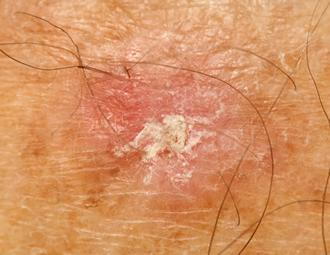
What does an actinic keratosis look like?
These small, scaly flat patches of skin are often felt before they are seen. They can be flesh-colored, white, tan, or pink and most often show up on sun-exposed areas of the skin such as the lips, ears, hands, face, or shoulders. Since most squamous cell carcinomas begin as actinic keratosis (AK), it’s a good idea to see a dermatologist if you are concerned that you might have actinic keratosis.
Am I at risk?
If you have a history of unprotected sun exposure or exposure to artificial UV light (e.g. tanning beds), if you are fair-skinned, or if you have a family history of actinic keratosis, it’s a good idea to examine your body and face once a month to keep tabs on any changes you may see. You should also see a dermatologist once a year for a comprehensive checkup and skin cancer screening.
What can I do to protect myself?
One of the best ways to reduce your risk for actinic keratosis is to limit sun exposure and to wear a full-spectrum sunscreen that protects against UVA and UVB rays. Make sure you are also wearing protective clothing, hats, and sunglasses if you do plan to spend any time out in the sun.
How is actinic keratosis treated?
The good news is that your dermatologist caught your actinic keratosis before it had a chance to turn into a squamous cell carcinoma, which also means removing this precancerous patch is quick and easy. Actinic keratosis may be treated with cryotherapy (to freeze off the lesion), topical medication, or laser therapy. Your dermatologist will discuss the best way to remove your actinic keratosis. Since actinic keratosis can come back, it’s important that you come in at least once a year for a skin exam.
Actinic keratosis is more common than you might think, affecting tens of millions of Americans. If you notice any changes to your skin it’s important that you turn to a dermatologist for an evaluation. Even if you aren’t noticing changes, it’s still a good idea to visit a dermatologist once a year for a comprehensive skin cancer screening.
- posted: Dec. 01, 2021
If you’ve ever spent time basking in the sun or even in a tanning bed, then you’ve exposed your skin to UV rays, which can be incredibly damaging to the skin and increase your risk for skin cancer. If you’ve spent extensive amounts of time exposed to UV rays, then you’re at an increased risk for developing actinic keratosis, a rough scaly patch of skin that’s also a form of precancer.
What does an actinic keratosis look like?
These small, scaly flat patches of skin are often felt before they are seen. They can be flesh-colored, white, tan, or pink and most often show up on sun-exposed areas of the skin such as the lips, ears, hands, face, or shoulders. Since most squamous cell carcinomas begin as actinic keratosis (AK), it’s a good idea to see a dermatologist if you are concerned that you might have actinic keratosis.
Am I at risk?
If you have a history of unprotected sun exposure or exposure to artificial UV light (e.g. tanning beds), if you are fair-skinned, or if you have a family history of actinic keratosis, it’s a good idea to examine your body and face once a month to keep tabs on any changes you may see. You should also see a dermatologist once a year for a comprehensive checkup and skin cancer screening.
What can I do to protect myself?
One of the best ways to reduce your risk for actinic keratosis is to limit sun exposure and to wear a full-spectrum sunscreen that protects against UVA and UVB rays. Make sure you are also wearing protective clothing, hats, and sunglasses if you do plan to spend any time out in the sun.
How is actinic keratosis treated?
The good news is that your dermatologist caught your actinic keratosis before it had a chance to turn into a squamous cell carcinoma, which also means removing this precancerous patch is quick and easy. Actinic keratosis may be treated with cryotherapy (to freeze off the lesion), topical medication, or laser therapy. Your dermatologist will discuss the best way to remove your actinic keratosis. Since actinic keratosis can come back, it’s important that you come in at least once a year for a skin exam.
Actinic keratosis is more common than you might think, affecting tens of millions of Americans. If you notice any changes to your skin it’s important that you turn to a dermatologist for an evaluation. Even if you aren’t noticing changes, it’s still a good idea to visit a dermatologist once a year for a comprehensive skin cancer screening.
Nampa Dermatology Office
16111 N Brinson Street, Suite 100,
Nampa, ID 83687
Office Hours
Nampa Office
Monday
8:00 am - 5:00 pm
Tuesday
8:00 am - 5:00 pm
Wednesday
8:00 am - 5:00 pm
Thursday
8:00 am - 5:00 pm
Friday
8:00 am - 12:00 pm
Saturday
Closed
Sunday
Closed
McCall Office
Monday
Closed
Tuesday
Closed
Wednesday
Closed
Thursday
Closed
Friday
By Appointment Only
Saturday
Closed
Sunday
Closed
